Short answer. Pick a stove made for saunas, sized for your room volume from the maker's chart, with a complete chimney kit approved for that stove. Before you buy, confirm that your town allows a wood stove in an outbuilding and plan where the firewood will stay dry.
Key facts
- A wood burning sauna stove is sized by the room volume it can heat, which makers list in cubic feet or cubic meters on the spec sheet.
- Wood burning sauna stoves typically take about 30 to 60 minutes to heat a small or mid-size sauna room, depending on the fire, the firewood and the weather.
- Firewood for a sauna stove is commonly considered dry when its moisture content is about 20 percent or less.
- Every wood burning sauna stove has minimum clearances to walls, benches and ceiling that are set by its maker and listed in its manual, not by a general rule.
If you are still deciding between fuel types, start with wood burning vs electric sauna heater. This guide assumes you have chosen wood and need to pick the stove itself.
What size wood stove do I need for a sauna?
Size the stove by the room volume, not by the number of people. Multiply length, width and height of the hot room, then choose a stove whose listed range covers that volume.
Makers publish a minimum and maximum room volume for each stove. A stove that is too small has to be fired hard and long to reach temperature. A stove that is too big can overheat a small room and makes the fire hard to control.
Some features add to the effective volume. Many manuals ask you to add margin for a glass door, a large window or uninsulated log walls, because these lose heat faster. Barrel saunas are measured the same way, using the inside dimensions. Our outdoor sauna sizes guide shows how to measure a hot room.
Which type of sauna wood stove fits my sauna?
The main choice is where you load the fire and how the stones sit. Each layout changes how the room is built and used.
| Feature | Option | What it means for you |
|---|---|---|
| Loading | Firebox door inside the hot room | Simplest install, but firewood and ash are handled inside the sauna |
| Loading | Through-wall feed from a changing room | Keeps wood and ash out of the hot room; needs a suitable wall and a changing room |
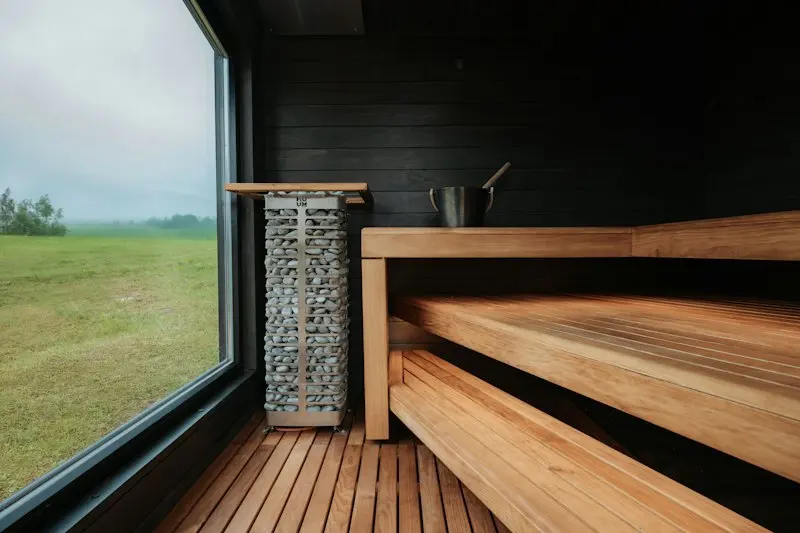
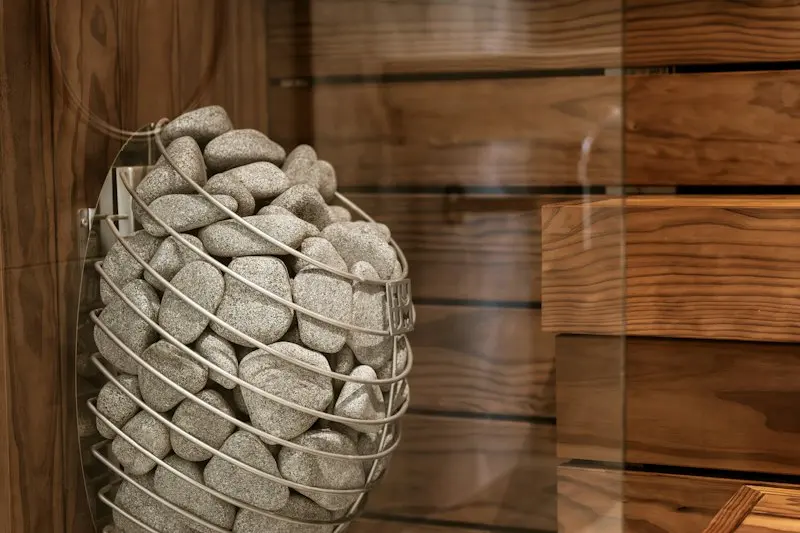
| Stones | Open stone basket on top or around | Fast heat and good steam; stones are easy to reach and restack |
| Stones | Large stone mass inside the stove body | Slower to heat, holds heat longer after the fire dies down |
| Door | Glass door | You can watch the fire; the glass needs cleaning |
| Extras | Water tank or kettle on the stove or pipe | Warm water for washing; adds weight and parts to drain in freezing weather |
Through-wall stoves pair well with a sauna that has a front room or changing room.
What does a sauna stove chimney need?
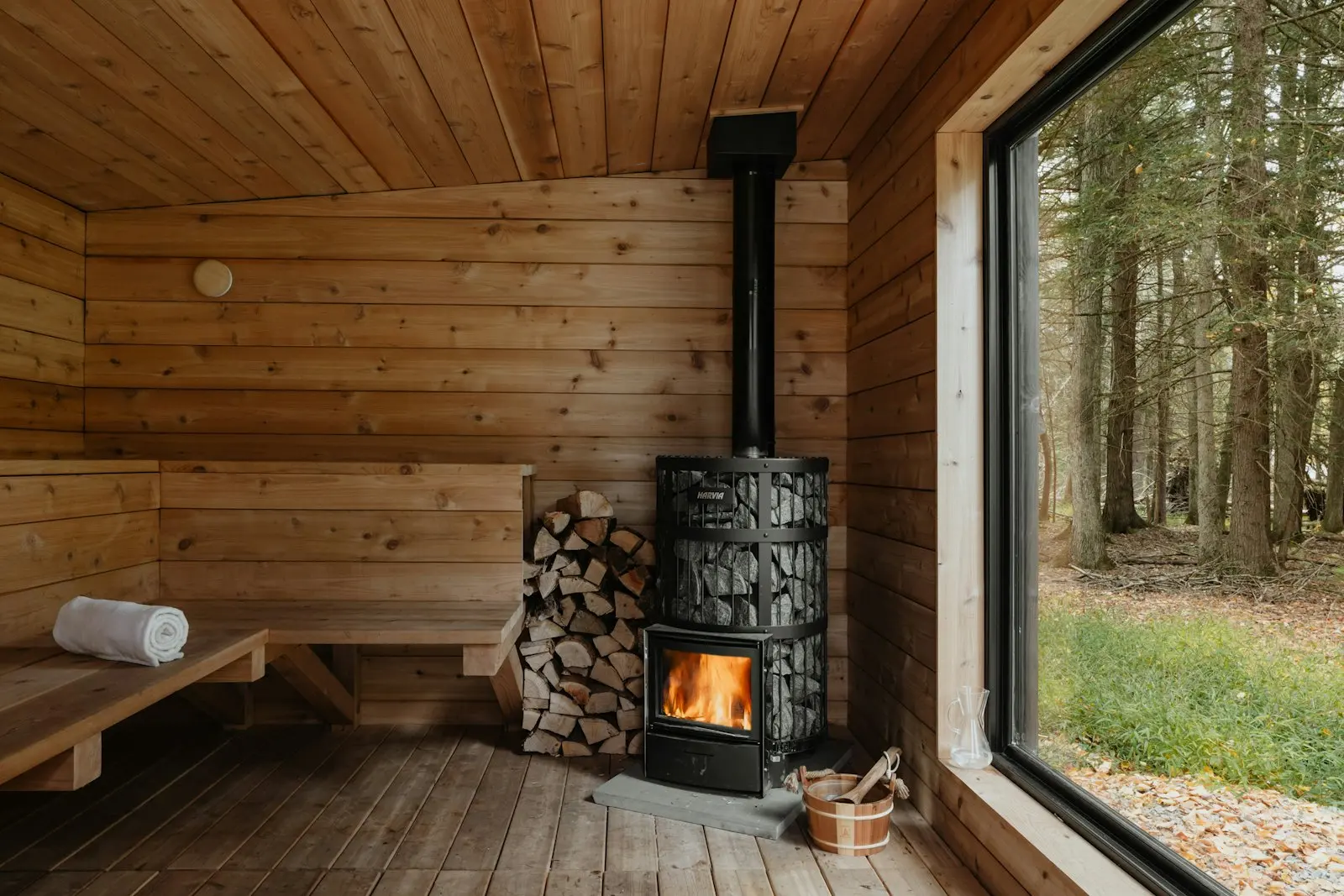
A sauna stove needs a chimney system that the stove maker approves, with the right parts where it passes through the roof or wall. It must be installed exactly as the stove and chimney manuals say.
A kit or stove package may include some of these parts, or none. Check the list before you order:
- Stove pipe from the stove outlet up to the ceiling or wall.
- Insulated chimney section where the pipe passes through the roof, ceiling or wall.
- Roof or wall penetration parts, such as a support, a flashing and a storm collar, matched to your roof shape. Barrel roofs need parts made for a curved surface.
- Chimney cap and spark arrestor, where the maker or local rules call for one.
- Heat shields and a floor pad, as listed by the stove maker.
The required chimney height and distances to the roof and nearby structures come from the chimney maker's instructions and local code. Do not copy figures from another stove or from a forum. Ask the building department whether a permit and inspection are needed.
How far does a sauna stove need to be from the walls?
The stove manual sets the minimum clearances to walls, benches, ceiling and the door. Follow those figures exactly; they differ from one stove to the next.
Heat shields can sometimes reduce the distances, but only in the ways the manual allows. Plan the bench layout around the stove's listed clearances, plus a guard rail where the maker recommends one so nobody leans on hot metal. A non-combustible pad under and in front of the stove is standard. The size and material of that pad also come from the manual.
What firewood works best in a sauna stove?
Dry, split hardwood burns hottest and cleanest. Firewood is commonly considered dry at about 20 percent moisture or less, which a cheap moisture meter can check.
Wet wood smokes, heats slowly and builds up creosote in the chimney. Store split wood under cover with air around it. Many owners keep a small rack near the door for the next few sessions. Never burn treated, painted or glued wood, trash or plastics.
What safety checks come first?
Check the rules and the safety gear before you light the first fire. A wood fired sauna is a small building with a fuel burning appliance, and local rules treat it that way.
- Local rules. Ask the building and fire departments about permits, approved stove types and burn restrictions. Homeowners associations may have their own rules. See outdoor sauna permit.
- Carbon monoxide alarm. Install one where the stove maker or local code calls for it.
- Fresh air. A fire needs air. Plan the vents as the stove maker describes; our sauna ventilation guide explains the basics.
- Extinguisher and ash bin. Keep a fire extinguisher nearby and a metal ash container with a lid.
- Insurance. Tell your home insurer about a wood stove in an outbuilding.
How do you care for a wood sauna stove?
Empty ash before it builds up, and sweep the chimney as often as the maker and local fire rules advise. Check the door seal, the glass and the pipe joints each season.
The stones on top crack and crumble over time. Restack them and replace broken ones; see sauna stones for how. A stove with a water tank must be drained if the sauna will freeze.
What to check before you buy
- The stove is made and listed for sauna use.
- Your room volume sits inside the stove's published range.
- The chimney parts you need are included or available for that stove.
- The listed clearances fit your room and bench layout.
- Your town allows a wood stove in an outbuilding, and a permit is planned if needed.
- You have a dry place for firewood and a plan for ash.
Common questions
What size wood stove do I need for my sauna?
Measure the room's length, width and height and multiply them to get the volume. Then pick a stove whose maker lists that volume within its range, adding margin for glass doors, windows or bare log walls if the manual says to.
Can I use a regular wood stove in a sauna?
A regular home wood stove is not designed for sauna use, with its stone load, high room heat and water thrown on rocks. Use a stove made and listed for saunas, and install it per its manual.
Does a sauna wood stove need a chimney?
Yes. A wood fired sauna stove needs a chimney system approved by the stove maker, run through the roof or wall with the right parts. Your building department may need to approve the installation.
What wood should I burn in a sauna stove?
Burn dry, split firewood, ideally seasoned hardwood. Never burn treated, painted or glued wood, trash or plastics, and follow the fuel list in the stove manual.
Do I need a carbon monoxide alarm in a wood fired sauna?
Many stove makers and local codes call for one in or near a building with a fuel burning appliance. Check the stove manual and ask your building or fire department what is required where you live.