Short answer. Use stones sold for sauna heaters, in the size range your heater manual lists, typically about 2 to 4 inches. Stack them loosely with large stones low and small ones on top, and check them at least once a year, replacing any that crack or crumble.
Key facts
- Sauna stones for home heaters are typically about 2 to 4 inches across, and the heater manual gives the size range to use.
- Sauna stones are commonly checked and restacked at least once a year, and more often when the sauna is used several times a week.
- Home sauna heaters typically hold from about 40 to more than 100 pounds of stones, depending on the model.
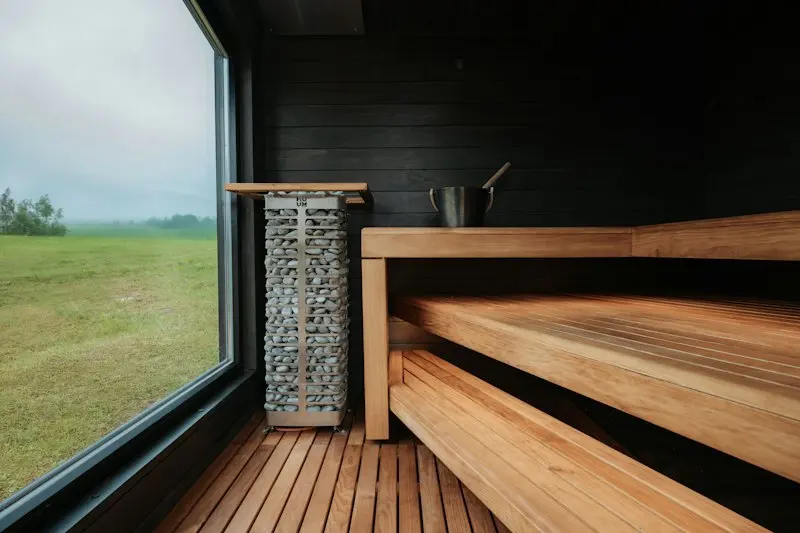
- Sauna stones should be stacked loosely so air moves between them, with no stone pressing on or touching an electric heating element.
What are sauna stones for?
Sauna stones store heat and release it evenly. When you pour a little water on them, they turn it into a burst of steam, which Finns call löyly.
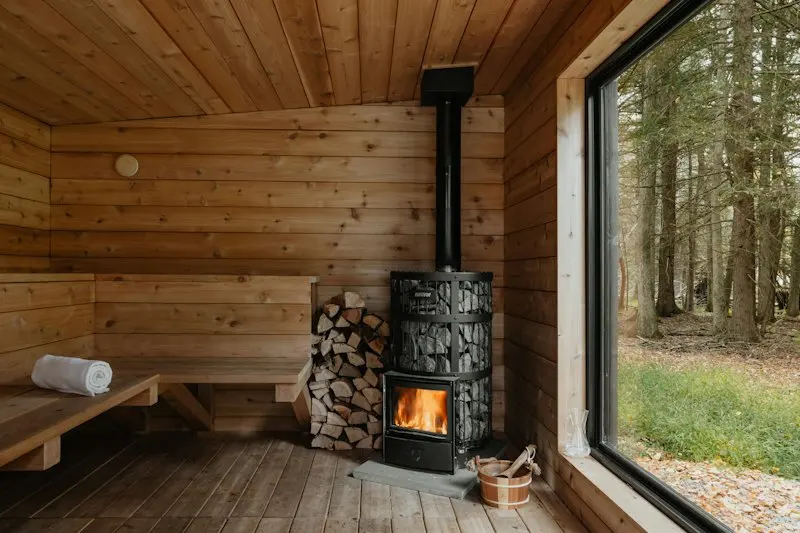
They also protect the heater. In an electric heater, the stones shield the elements and spread their heat. In a wood stove, they sit over or around the firebox and soften the radiant heat from the metal. That is why the stone load and the way it is stacked matter. Both electric sauna heaters and wood burning sauna stoves list a stone capacity on the spec sheet.
Which rocks are best for a sauna?
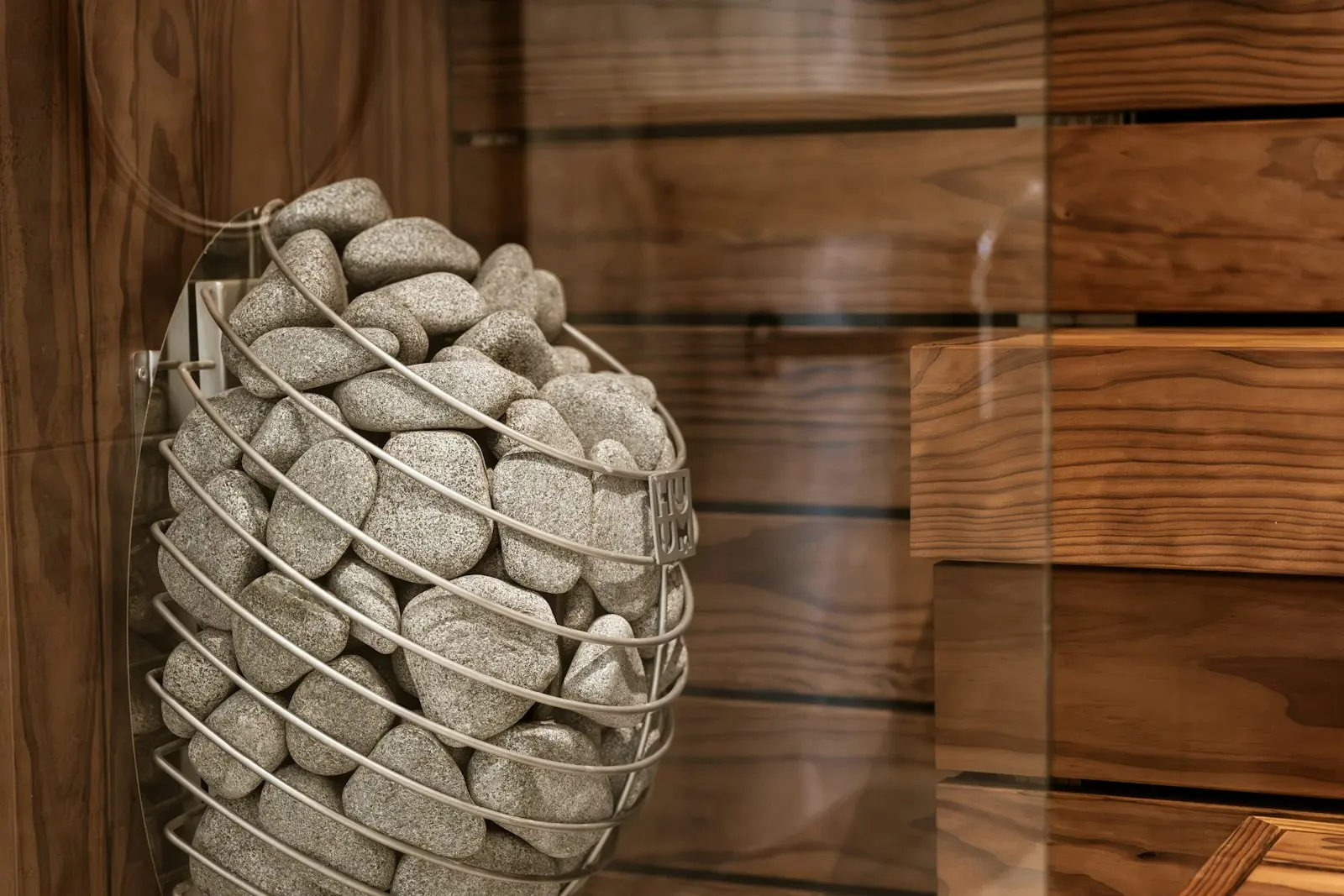
Dense, heat-tolerant stones sold for sauna heaters are the right choice. Olivine diabase and peridotite are the most common, and vulcanite or soapstone show up on some heaters.
| Stone type | Shape | Notes |
|---|---|---|
| Olivine diabase | Split, rough faces | The most common heater stone; dense and durable |
| Peridotite | Split or rounded | Heavy and heat tolerant; often sold as a premium option |
| Rounded diabase | Smooth, tumbled | Looks tidy on open heaters; less surface for steam than split stones |
| Vulcanite | Rough, porous look | Lighter; used on some heaters, check the manual |
| Ceramic stones | Uniform shapes | Allowed by some makers, forbidden by others |
| Yard, river or beach rocks | Varies | Avoid; may hold water or minerals and crack when heated |
Split stones have more surface and rough edges, so they tend to give more steam. Rounded stones look neat and pack differently, so some makers suggest mixing them or putting rounded ones only on top. Follow your heater manual.
What size sauna stones do I need?
Most home heaters typically use stones about 2 to 4 inches across. Your heater manual gives the exact size range.
Stones that are too small pack tightly and block the airflow. Stones that are too big leave large gaps and may not cover the elements. Some heaters call for two sizes, larger at the bottom and smaller on top.
The amount is set by the heater, not by taste. Capacity typically runs from about 40 to more than 100 pounds depending on the model. Stones are often sold in boxes by weight, so check whether your heater or kit includes them.
How do you stack sauna stones?
Stack them loosely by hand, largest at the bottom, smallest on top. Air must flow between the stones, and no stone should press on an electric element.
- Rinse the stones. Wash off dust and grit with clean water and let them drain.
- Sort by size. Set aside broken or flat pieces.
- Fill the bottom. Place larger stones first, upright or on edge, between and around the elements as the manual shows.
- Work up. Add smaller stones as you go, leaving gaps. Do not drop or wedge them in.
- Cover the elements. The manual shows how high the stones should come. Some heaters want the elements fully covered; do not build a tall pile above that.
Packed stones are a common cause of an electric heater that overheats, trips its safety limit or wears out elements early. Loose stacking lets the heat move into the room.
How often should you replace sauna stones?
Check and restack the stones at least once a year, and more often with heavy use. Replace any that are cracked, flaking or crumbling.
Heating and water slowly break stones down. Small chips fall to the bottom of the basket, where they block air. When you restack, empty the heater, clear out the grit, and reload the good stones with new ones to fill the gaps.
Signs it is time to restack or replace:
- The sauna takes longer to heat than it used to.
- Stones have settled and elements show through.
- You find grit or flakes under the heater.
- Steam feels harsh or uneven.
This is part of routine care, along with the benches and the door. See outdoor sauna maintenance for the rest of the list.
How much water should you pour on sauna stones?
Start with small ladles poured over the stones, not straight onto the elements or the stove body. The heater manual says how much is acceptable.
Use clean tap water. Salt water, pool water and some scented additives can damage the stones or the heater, so check what the maker allows. Water raises the humidity and makes the room feel hotter for a moment; see ideal sauna temp for how temperature and humidity work together.
What to check before you buy stones
- The stone type your heater maker allows, and whether ceramic stones are excluded.
- The size range in the manual.
- The total weight your heater takes.
- Whether the stones are sold for sauna use, not as landscape rock.
- Whether your heater or kit already includes a set.
Common questions
Can I use any rocks in a sauna?
No. Use stones sold for sauna heaters, such as olivine diabase or peridotite. Rocks from a yard, river or beach can hold water or minerals and may crack or split when heated.
How often should sauna stones be replaced?
Check and restack them at least once a year, and replace stones that are cracked, crumbling or flaking. With heavy use, many owners do this more often, as the heater manual advises.
How do you stack sauna stones?
Put the larger stones at the bottom and smaller ones on top, placed loosely by hand so air can pass. Cover the elements as the manual shows, without wedging any stone against them.
Do I need to wash new sauna stones?
Yes, rinse new stones in clean water to remove dust before loading them. The first few heat-ups may give off a light smell as the stones and heater settle.
Can I use ceramic stones in an electric sauna heater?
Only if the heater maker allows it. Some makers forbid ceramic or artificial stones because they can trap heat around the elements, so check the manual before buying.