Short answer. Keep water moving off and away from the sauna, and let the inside dry after every use. Refinish the exterior every 2 to 3 years, check barrel bands at least twice a year, keep a roof cover on a barrel, and clean the benches with mild products. The inside walls stay unfinished.
Key facts
- The exterior of an outdoor sauna is commonly refinished every 2 to 3 years with a breathable, water repellent stain or oil that has UV protection.
- The interior of an outdoor sauna should not be coated with ordinary stain, paint or varnish, because the wood has to breathe and the finish would be heated.
- A new barrel sauna can drip between the staves in its first weeks, and the gaps typically close as the wood takes up moisture and swells.
- The steel bands of a barrel sauna are commonly checked and adjusted at least twice a year, because the staves swell in wet weather and shrink in dry weather.
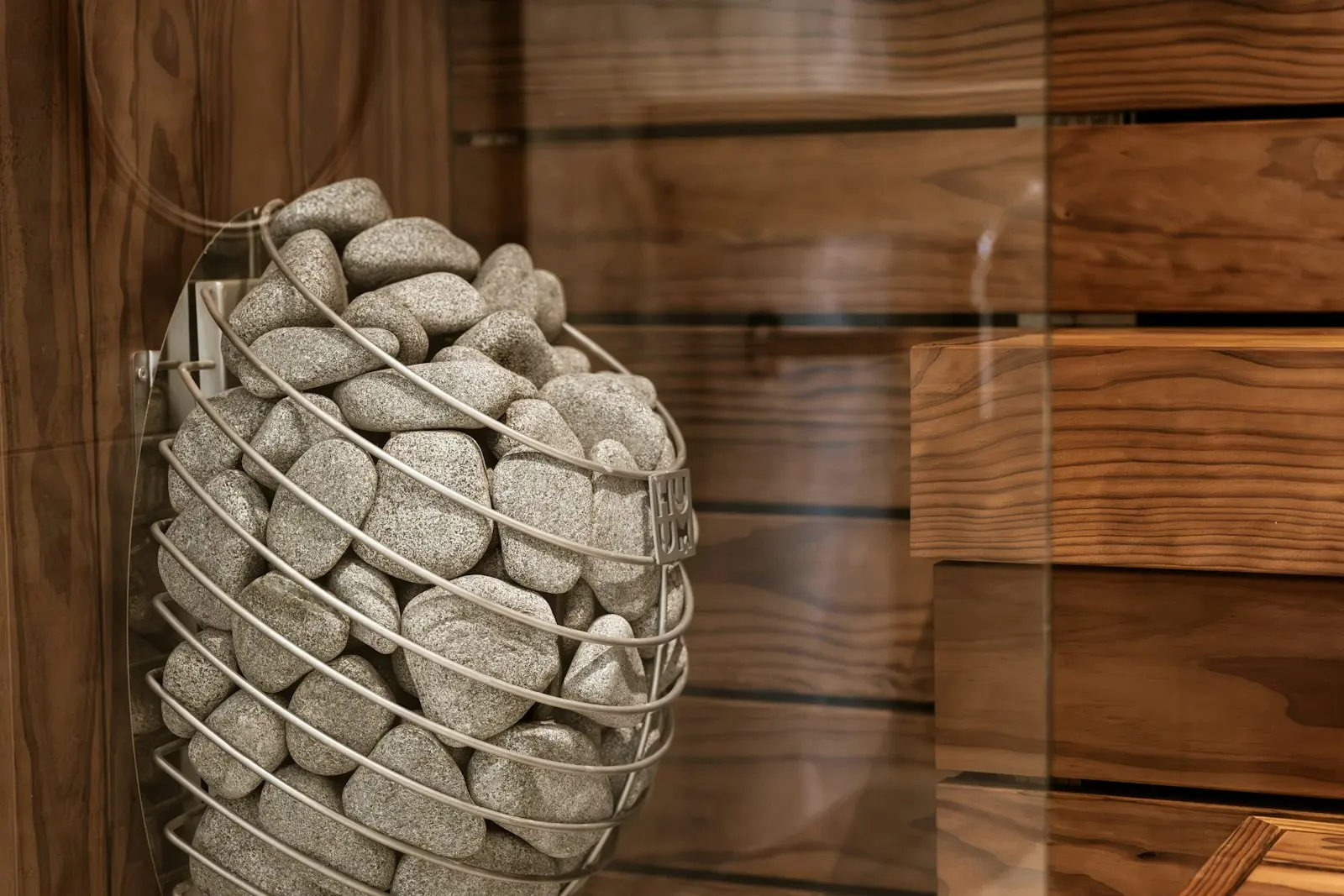
- Sauna heater stones are commonly restacked once a year and replaced when they crack or crumble.
What maintenance does an outdoor sauna need?
A few minutes after each session and a longer check twice a year. Here is the usual calendar.
| Task | How often | Why |
|---|---|---|
| Air out and dry the room | After every use | Dry wood resists mold and stains |
| Wipe benches, sweep floor | Every week or two of regular use | Sweat and dirt mark soft wood |
| Check barrel bands | Spring and fall, and after assembly | Staves swell and shrink with the seasons |
| Inspect roof cover or shingles | Twice a year and after storms | The top takes the most rain and sun |
| Restack and inspect stones | About once a year | Cracked stones block air flow in the heater |
| Recoat the exterior | Commonly every 2 to 3 years | UV and water gray and crack bare wood |
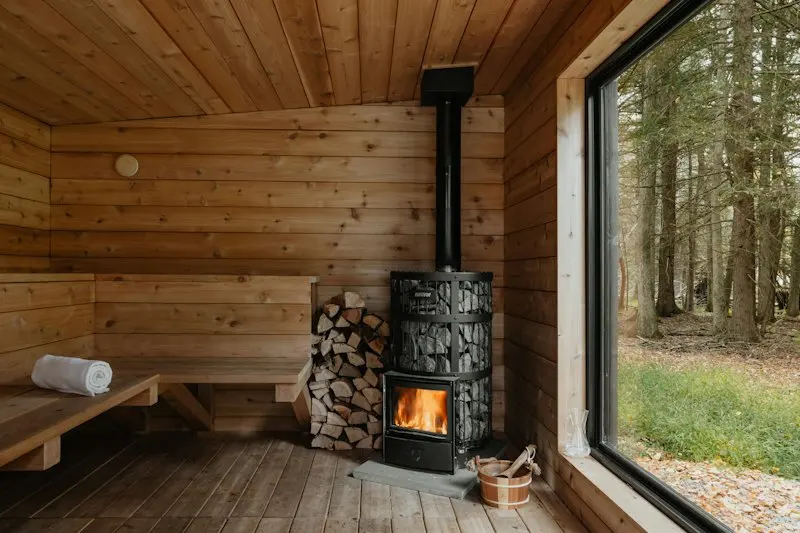
| Sweep the chimney (wood stove) | At least once a year | Soot buildup is a fire risk |
These intervals are common guidance. The manual for your kit and heater comes first.
How do you seal a barrel sauna?
You seal the outside only, with a finish that sheds water but lets the wood breathe. You do not caulk the joints and you do not coat the inside.
- Clean and dry the exterior. Brush off dirt. Let the wood dry for a few days of fair weather.
- Apply a breathable exterior finish. A penetrating, water repellent stain or oil with UV protection is the common choice. Film forming varnish tends to crack and peel as the staves move.
- Cover end grain. The ends of staves and the bottom edges of the end walls soak up the most water.
- Leave the joints alone. Staves need to slide and swell. Caulk between them traps water and fails when the wood moves.
- Add a roof cover. Shingles, a metal cap or a fitted cover over the top half keeps rain off the joints that leak first.
Ask the maker which finishes are approved. Some warranties name the products you can use. Cedar can be left bare and will turn silver gray, but it still lasts longer with a finish. Our guide to cedar and other sauna woods covers how each species weathers.
Why the inside stays bare
Interior wood heats up, takes on moisture and gives it back. Ordinary stains, paints and varnishes are not made for that heat, and they stop the wood from drying. If you want to protect benches, use only a product sold for sauna interiors, and follow its label.
Do barrel saunas leak?
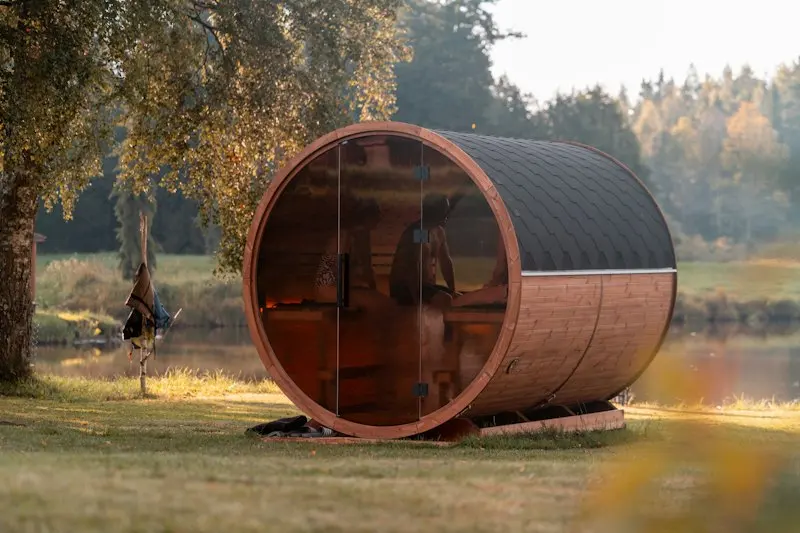
Some do, a little, and usually for a short time. A barrel is made of staves held together by steel bands, with no glue and no membrane, so the joints are tight only when the wood is swollen.
Leaks show up in three situations:
- A new barrel. The staves were dried for shipping. Drips in the first weeks commonly stop as the wood takes up moisture.
- After a long dry, hot spell. The top staves shrink in the sun, then leak in the first heavy rain.
- Loose bands or a barrel that is out of level. The joints open on one side.
The fixes follow from the causes: keep the bands snug, keep the barrel level on its cradles, and cover the top. A roof kit is the most reliable answer, and many sellers offer one as an option. Cabins with a real roof do not have this weak point, which is one of the differences explained in barrel sauna vs cabin sauna.
How do you tighten the bands on a barrel sauna?
Turn the nut on each band a little at a time until the staves sit tight, without crushing the wood. Work from band to band so the pressure stays even.
- Check the bands a few weeks after assembly, then every spring and fall.
- In dry season, staves shrink and bands go slack. Snug them up.
- Before a wet season, do not overtighten. Swelling wood needs room, and a band that is too tight can dent staves or strain its own hardware. Some makers tell owners to back the nuts off slightly.
- If a stave has slipped out of line, loosen the bands slightly, tap it back with a rubber mallet and a block, and retighten.
The correct tension and method are in the assembly manual. The same manual is covered step by step in how to assemble an outdoor sauna kit.
How do you clean an outdoor sauna?
With little water and mild products. The goal is dry, clean wood.
- Sit on towels. It is the simplest way to keep benches clean.
- After use, leave the vent open and the door ajar until the room is dry.
- Wipe benches and backrests with a damp cloth. For marks, use a cleaner made for saunas, well diluted.
- Sand dark sweat stains lightly with fine paper, along the grain.
- Lift the floor boards or duckboard now and then and sweep under them.
- Clean the door glass with a mild glass cleaner on a cloth, not sprayed onto the wood.
- No pressure washer, no bleach, no strong solvents inside.
What wears out on an outdoor sauna?
A short list of parts takes most of the wear.
- Stones. They crack from heating and cooling. Restack them loosely once a year and replace the ones that crumble.
- Heating elements. Electric elements are replaceable parts. Tightly packed or crumbled stones shorten their life.
- Exterior finish. The sunny and windward sides fade first.
- Roof cover. Shingles and fabric covers age like any roof.
- Door hardware and seals. Hinges loosen and wood doors swell. Adjust before the door drags.
- Wood near the ground. Cradles and floor frames suffer if the base holds water. A draining base prevents most of it. See outdoor sauna foundation.
- Chimney parts. For a wood stove, inspect the flue and the roof flashing every year.
Any repair on the electrical side of the heater belongs to a licensed electrician, with the power off at the breaker.
Common questions
Do barrel saunas leak?
A barrel sauna can let some water through between the staves, mostly when it is new or after a long dry spell, because the staves are not glued. The gaps usually close as the wood swells. A roof cover or shingle kit is the common fix for a barrel that keeps dripping.
How do you seal a barrel sauna?
Treat the outside with a breathable, water repellent stain or oil with UV protection, keep the bands snug, and add a roof cover over the top half. Do not caulk between the staves and do not seal the inside walls.
How often should you stain an outdoor sauna?
The exterior is commonly recoated every 2 to 3 years, sooner on sides that take full sun or driving rain. Follow the sauna maker's finish recommendations, since some finishes can affect the warranty.
How do you clean the inside of an outdoor sauna?
Sweep or vacuum the floor, wipe benches with a damp cloth and a mild cleaner made for saunas, and let the room dry with the vent and door open. Light sanding removes sweat stains from benches. Do not use a pressure washer or harsh chemicals inside.
How long does an outdoor sauna last?
Lifespan depends on wood, climate and care, and makers do not publish one figure. Keeping the sauna off the ground, dry between uses and finished on the outside are the habits that matter most.