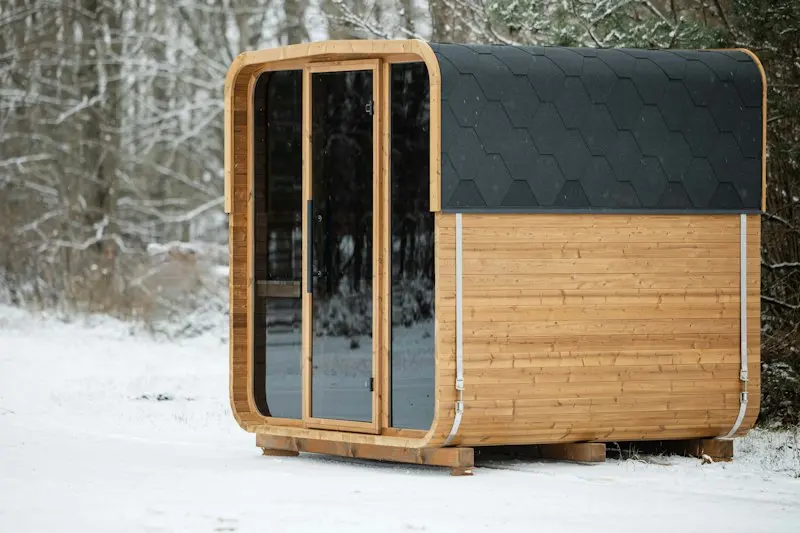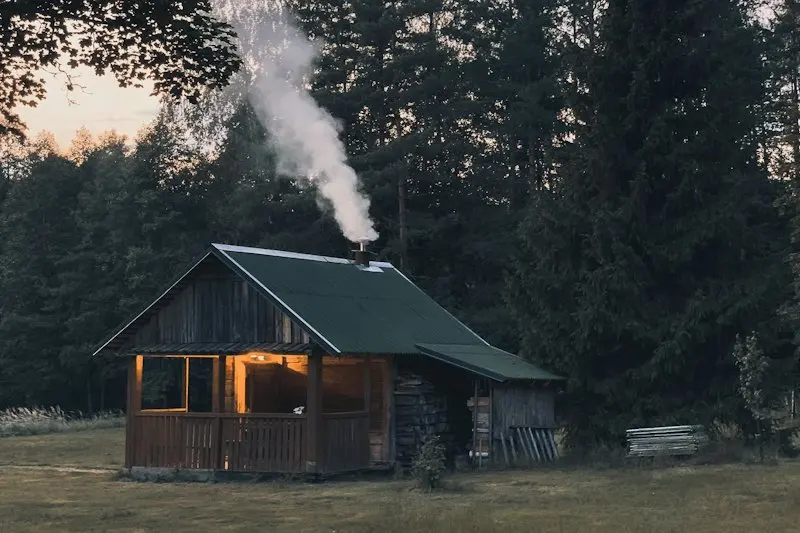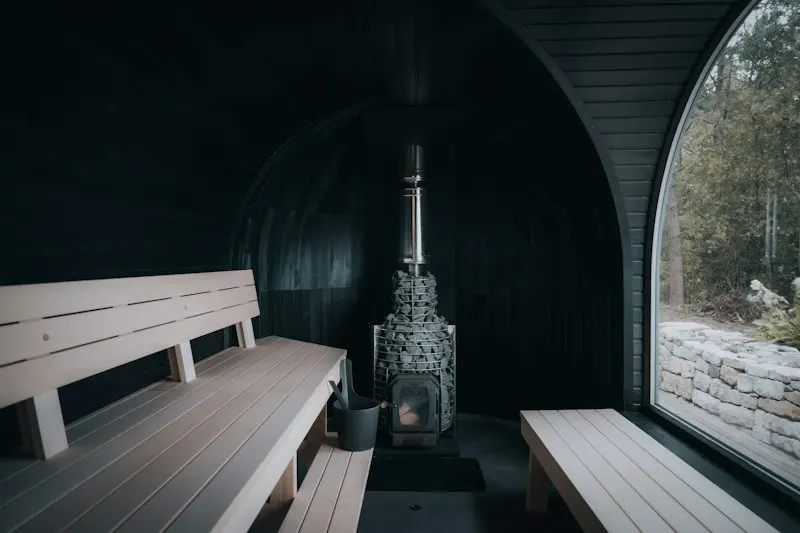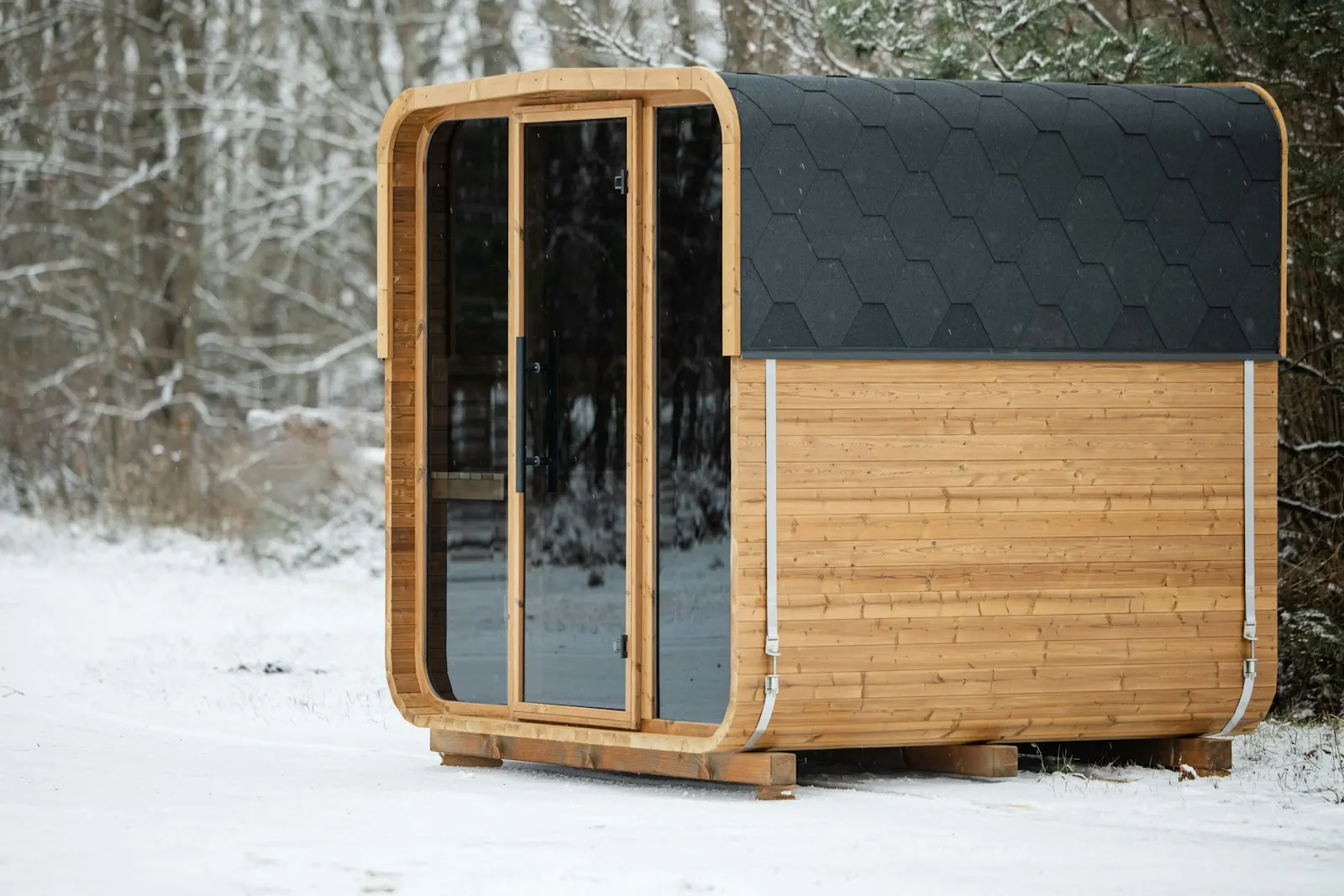
Short answer. An outdoor sauna works all winter, including in snow. In freezing weather it takes longer to heat than the 30 to 60 minutes makers commonly quote, mostly because of thin walls, glass and wind. In a cold climate, look at wall thickness or insulation, a heater at the upper end of the rated range, a roof that handles snow and a safe path to the door.
Key facts
- An outdoor sauna can be used all winter, and in freezing weather it typically takes longer to heat than the 30 to 60 minutes makers commonly quote.
- Solid wood barrel saunas are commonly built from staves about 1.5 inches thick with no added insulation, so they lose more heat in winter than an insulated cabin.
- In a cold climate, common advice is to choose an electric sauna heater at the upper end of the kW range rated for the room volume.
- A barrel sauna's curved top sheds snow, while a cabin sauna depends on its roof pitch and on the snow load rating published by the maker.
- Outdoor sauna doors open outward, so snow and ice must be kept clear of the door swing and the step in winter.
Can you use an outdoor sauna in winter?
Yes. Cold air outside does not stop a sauna from reaching temperature. It makes the heater work longer and harder to get there.
Three things change in winter: the time to heat up, the heat lost while you use it, and the conditions around the sauna. The first two depend on how the room is built. The third depends on where you put it.
How long does an outdoor sauna take to heat up in winter?
Longer than the listing says. Makers commonly quote about 30 to 60 minutes, usually for mild weather. In freezing temperatures, plan for more, and an hour or longer is not unusual for an uninsulated room.
The wood itself starts cold and has to warm through. Four factors decide how much time that adds.
- Heater power. A heater at the bottom of its rated range for the room struggles on the coldest days. Common advice for cold climates is to choose the upper end of the range. See how heaters are matched to room volume in outdoor sauna sizes.
- Walls and roof. Thin or uninsulated walls let more heat out.
- Glass. A full glass front loses much more heat than a wood wall. Heater makers usually tell you to count extra room volume for it.
- Wind. An exposed spot cools the shell faster than a sheltered one.
With an electric heater, a timer or a remote start takes the sting out of the wait. With a wood stove, dry firewood stored under cover matters even more in winter. Both types are compared in wood burning vs electric sauna heater.
Wall thickness and insulation
Wall build is the main difference between kits in the cold. The table shows the common types.
| Wall type | Typical build | Heat-up in the cold | Holding heat | Common in |
|---|---|---|---|---|
| Standard solid staves | About 1.5 inches of solid wood, no insulation | Slowest | Fair, more heat lost in wind | Barrels, pods |
| Thicker solid wood | About 1.75 to 2.75 inches of solid wood | Moderate | Better | Upgraded barrels, log style cabins |
| Insulated frame wall | Framed wall with insulation, a foil vapor barrier and an inner lining | Quickest for its size | Best | Cabins |
Thicknesses are common figures from published specifications. Compare the number on the spec sheet of each kit, and check whether the roof and floor are insulated too. Heat rises, so an uninsulated roof matters more than an uninsulated floor.
Is a barrel sauna good in a cold climate?
It works, with limits. A barrel has less air to heat than a cabin of the same footprint, which helps. Its thin solid walls work against it once the temperature drops well below freezing.
If you want a barrel in a cold region, look for thicker staves if they are offered, a heater at the upper end of the rated range, a small window instead of a full glass wall, and a roof cover. For long, harsh winters, an insulated cabin is the usual choice. We compare the shapes in barrel sauna vs cabin sauna.
Snow load and the roof
A barrel or pod sheds most snow off its curve. A cabin relies on its roof pitch and structure.
- Ask for the snow load rating. Some makers publish one, in pounds per square foot. Compare it with the figure your building department uses for your area. If no rating is published, ask the seller in writing.
- Clear heavy snow. Use a soft roof rake or a broom, not a metal shovel that can damage shingles.
- Watch where it lands. Snow sliding off a curved roof piles up along both sides and can pack against the lower wood. Keep it pulled back.
- Chimney. On a wood burning model, sliding snow can push on the pipe. Makers may recommend a brace or a snow guard.
Do you need a roof cover in winter?
On a barrel, it is worth having. Staves shrink in cold, dry air and small gaps can open at the top. Meltwater finds them and refreezes.
A shingle kit or a fitted roof cover over the upper half keeps water and ice off the joints. Check whether it is included or an extra. Recheck the bands in early winter, since wood moves as the seasons change. An exterior finish applied before the cold season protects the wood from wet snow.
The path, the step and the door
The walk to the sauna is where winter causes the most trouble.
- Keep it short. Every extra yard from the house is a yard in a robe at night. Place the sauna as close as setbacks allow.
- Make the path firm. Pavers or gravel shovel more easily than lawn. Add a light.
- Clear the door swing. Sauna doors open outward. Snow or ice in front of the door can block it, so clear it before each session.
- Mind the step. Wet feet and a frozen step are a slipping hazard. A textured mat outside and a dry floor mat inside help.
- Lift the base. A base slightly above the surrounding ground keeps meltwater from pooling under the floor. See outdoor sauna foundation.
Winter care
- Dry it out. After the session, leave the vents open and let the remaining heat dry the room.
- No standing water. Empty the bucket and ladle. Water left inside freezes and can crack a wooden bucket.
- Plumbing. Drain any hose, outdoor shower or water line near the sauna before the first frost.
- Heater notes. Read the cold weather section of the heater manual. Some controls and sensors have a minimum operating temperature.
Heat-up times, thicknesses and ratings here are common ranges from published specifications. Confirm them on the spec sheet of the model you are considering.
Common questions
Can you use an outdoor sauna in winter?
Yes. Outdoor saunas are built to be used year round, including in snow and freezing temperatures. Expect a longer heat-up, keep the path and door clear of ice, and follow the maker's cold weather notes for the heater.
How long does an outdoor sauna take to heat up in winter?
Makers commonly quote about 30 to 60 minutes in mild conditions. In freezing weather, allow more, often an hour or longer for an uninsulated barrel with a modest heater. Room size, wall thickness, glass area and wind all change the figure.
Are barrel saunas good in cold climates?
They work, and many are used in cold regions. A barrel has thin solid wood walls and no insulation, so it loses heat faster than an insulated cabin. A heater at the upper end of the rated range and a roof cover help.
Do I need an insulated sauna for winter?
Not always. A small solid wood sauna with a strong enough heater reaches temperature in the cold. Insulation matters more as winters get harsher and the room gets bigger, because it shortens heat-up and holds the temperature.
Can a sauna roof hold snow?
A barrel or pod sheds most snow off its curve. A cabin roof is rated for a certain snow load on some models. Ask the seller for the rating and compare it with the requirement from your local building department.